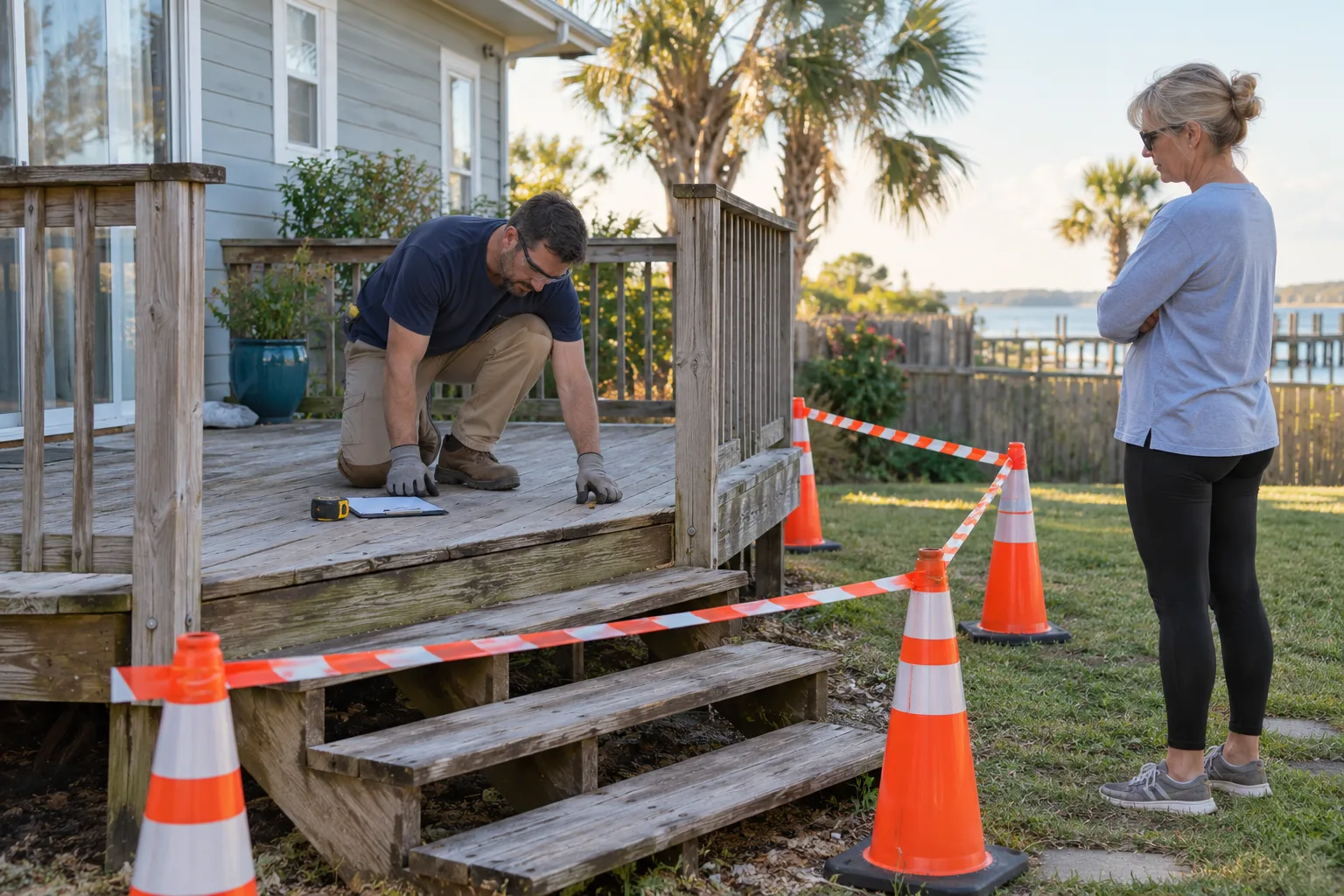
What exactly is being removed?
Define the limits in plain language: one shed, one fence run, a deck section, or a play structure. Confirm what stays, what gets hauled away, and whether the ground needs to be left clear or merely accessible.
If the work touches a load-bearing part of the home, roofing, foundation, or active utilities, it is no longer a simple haul-away decision.
Are utilities present?
Locate electrical, gas, water, sewer, cable, and irrigation connections before work starts. Never assume a detached feature is disconnected because it looks unused.
The property owner may need a licensed trade or utility provider to disconnect and verify a line before demolition.
Do permits or material rules apply?
Biloxi publishes permit resources and lists a demolition permit fee. Historic-area, zoning, and building requirements can add review steps. Confirm the current rule with the city before work begins.
Older paint, suspected asbestos, chemicals, pest contamination, and refrigerant equipment need separate assessment. EPA lists paint, solvents, cleaners, pesticides, oils, batteries, and compressed gas among household hazardous wastes commonly found around demolition.
Pre-work questions
- Who owns the structure and approves removal?
- What are the exact removal limits?
- Which utilities serve the area?
- Does the city or neighborhood require approval?
- Could hazardous or regulated material be present?
- Where can the crew park, stage, and load debris safely?
Need to check a pickup window?
Call with the checklist details and ask about the next available route opening.
Call (202) 555-0153